
East Windsor Directory Holdings
East Windsor has no verified, continuous city-directory series published solely for the township. The useful shelf is a set of neighboring and regional sources. The Princeton Public Library family-history guide points researchers to physical directories at its second-floor desk and to regional microfilm, census, and database help. Hightstown’s digital archive and the Hightstown-East Windsor Historical Society add newspapers, maps, books, and local historical material. The dates below describe collection coverage, not proof that every listed edition contains an East Windsor entry.
| Collection | Years | Where held | Access |
|---|---|---|---|
| Polk’s Princeton directories | Physical directories from 1916-17 to 1982, with gaps | Princeton Public Library | Ask for the exact year and geographic coverage |
| HeritageQuest Polk’s directories | 1901-1958 with listed gaps | Princeton Public Library database | Full-text licensed access, subject to current library rules |
| Princeton/Suburban Trenton Criss-Cross | Exact all-year run not located | Princeton Public Library | Reverse street and telephone organization; nearby Hightstown/Cranbury may be included |
| Fitzgerald’s Trenton and Mercer County Directory | Many years from 1881-1896 | New Jersey State Library | Regional Mercer lead; inspect the volume for an East Windsor entry |
| Hightstown local newspapers | Runs beginning 1846, 1849, 1852, 1853, 1857, 1879, and 1965 as listed | Digifind-It, MCLS, HEWHS | Keyword search, then verify issue and page |
These collections complement one another. A city directory can give a dated address or telephone number, while a newspaper can show an event, organization, estate notice, or obituary around the same period. A census enumerates a household at a point in time. None is a continuous modern roll.
East Windsor Newspaper Collections
The Hightstown digital archive is a strong East Windsor substitute when a directory year is missing. It lists searchable documents and newspaper runs including the Hightstown Gazette, Hightstown Independent, Hightstown Excelsior, Village Record, Windsor Heights Herald, Daily Graphic, Delaware State Reporter, and Independent Weekly. Start with the exact surname, address, street, organization, or event. Then try spelling variants and the locality labels East Windsor, Hightstown, and Etra. Search snippets are leads only, so check the whole issue and page.
The Hightstown digital archive page below is the source for this local newspaper route. It can place a directory lead in its surrounding community record, but a notice may identify an owner, relative, organization, or event rather than an occupant.
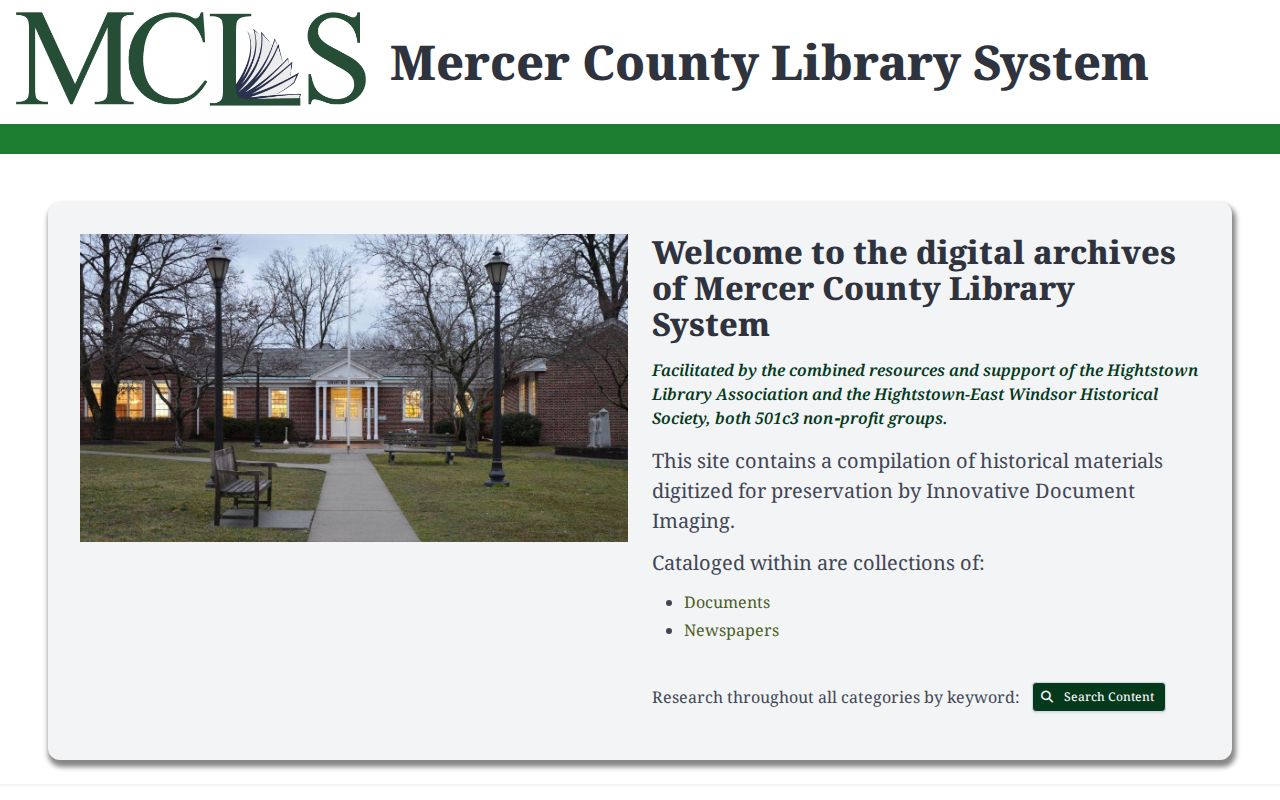
Reading adjacent pages can matter. A Mercer County Library research example for a 1916 name request turned up an obituary, an estate-sale notice, and a church-committee item, showing how one dated name can branch into several record types.
There is an important coverage nuance: the archive describes the Gazette as 1852-2006, while the library blog identifies its final issue as 2005. Preserve the cited issue date and image instead of turning those descriptions into one fixed run. Some Windsor Heights Herald material may also be available only on library computers because of copyright limits.
East Windsor Regional Directory Shelf
Princeton’s directory shelf provides the regional route. Polk’s Princeton directories have documented gaps, so list the actual years available rather than writing a continuous range. HeritageQuest lists online Polk’s years for 1901-1915; 1919; 1921-1928; 1931-1936; 1938-1942; 1947; 1949-1950; 1952; 1954-1955; and 1957-1958. The library also lists Princeton community phone books from 1961 and 1963-1989, then selected later years, plus Suburban Trenton phone-book material. These are regional collections. Confirm the volume’s place coverage before treating it as an East Windsor historical-directory source.
The HeritageQuest information page is the source for its full-text directory and census holdings. East Windsor researchers can use library staff and the second-floor desk when online coverage has a gap. The research did not locate a public image of an actual Hightstown directory entry, so no publisher-specific abbreviation key should be assumed.
The Princeton Public Library family-history guide below documents the regional directory, census, microfilm, and research-desk route.
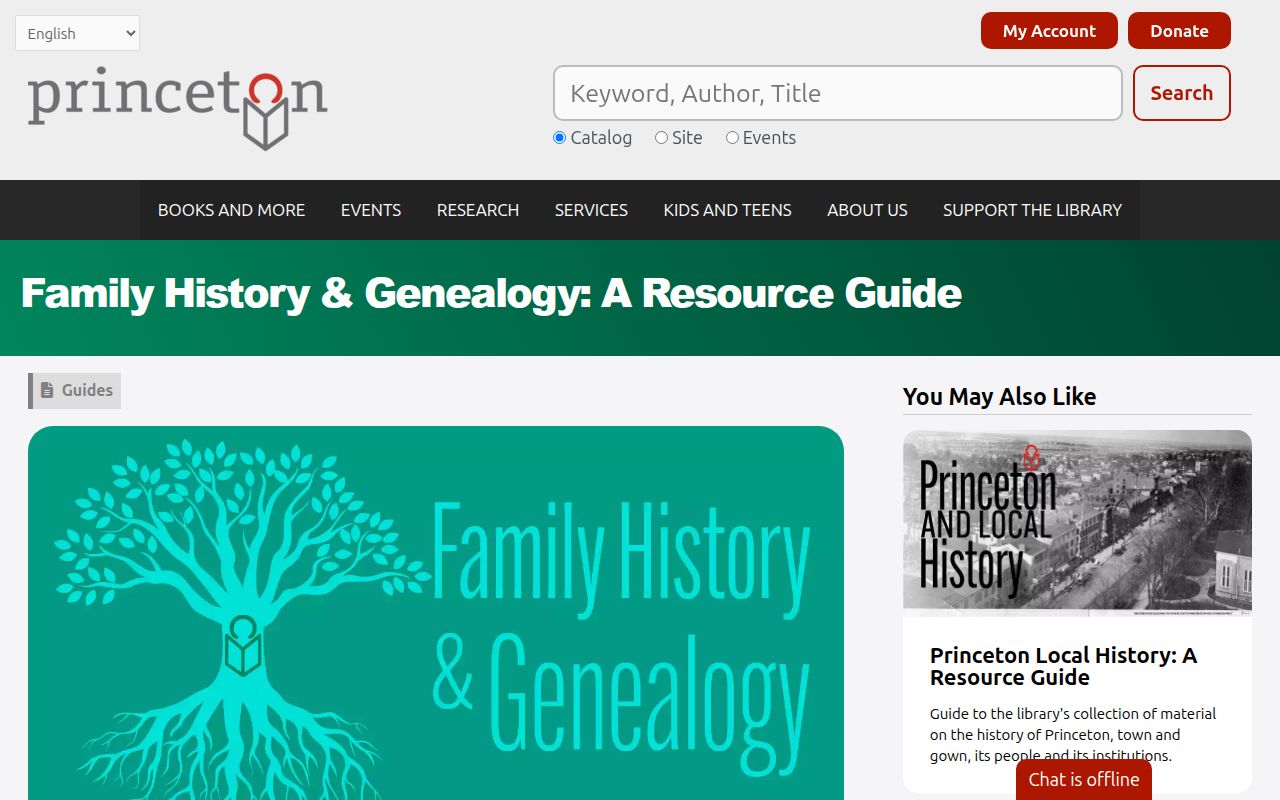
The library guide helps distinguish a physical desk collection from a database collection, so the requested directory year can be checked against the right access route.
Note: A directory that omits a surname may reflect a geographic gap, a publication gap, a different spelling, or an unlisted household rather than a proven absence.
Reading East Windsor Directory Entries
Read an East Windsor historical directory as a dated printed statement. The verified collection guides expect surname and given name or business, street address, later telephone information, and reverse street or number organization in Criss-Cross volumes. An individual publisher may also use status, spouse, or occupation notation, but the actual Hightstown entry image and publisher-specific abbreviation key were not captured in the research. Copy the title, publisher, edition year, page or image, printed place label, and the entry exactly before expanding its meaning.
| Name or business | The name printed in that edition, with initials and spelling preserved |
|---|---|
| Street address | A dated listing, not a claim of present occupancy |
| Telephone | May appear in later volumes; record it only as a volume field |
| Street-side listing | Possible in a Criss-Cross volume organized by address or telephone address |
| Edition evidence | Title, publisher, year, page or image, and geographic scope |
- Criss-Cross directory
- A reverse directory organized by street or telephone address, useful when a surname search fails.
- Householder index
- An index that points from a person or household name to an entry. Whether one appears depends on the specific volume.
- Abbreviation key
- The publisher’s explanation of short forms. Photograph or copy it from the same volume before interpreting a notation.
Note: An expected directory field is not an observed Hightstown entry until the cited volume, page, and publisher key are checked.
East Windsor Historical Place Names
Place labels can explain an apparent break in a city-directory trail. Hightstown is an independent borough in the East Windsor area. It incorporated from East Windsor in 1853, and official history lists additional East Windsor portions annexed in 1913, 1915, and 1927. Search both modern labels when an old entry lies near that changing jurisdiction. Then use the printed street, block and lot, legal description, map, or landmark to decide whether the records point to the same place.
Keep East Windsor historic locality words intact as well. Old York, Old Cranbury, Dutch Neck, Wyckoff Mills, Etra, and Princeton-Hightstown Road are documented township-history search leads. They can be useful in a newspaper, map, or deed even when a current standardized address uses different wording. A postal Hightstown or Cranbury label is also separate from the civil municipality.
East Windsor Sanborn Records
Maps keep the city-directory trail honest about the site itself. The Princeton Sanborn Hightstown index lists selected maps for 1885, 1890, 1895, 1902, 1910, 1916, and 1925. A sheet can show a street, building footprint, stories, material, use, and fire-risk detail. It cannot identify all occupants. Pair the sheet year with the directory edition or newspaper date rather than using a building mark as a person record.
The Princeton Sanborn Hightstown index shown here is a useful site-confirmation source for the East Windsor historical-directory research sequence.
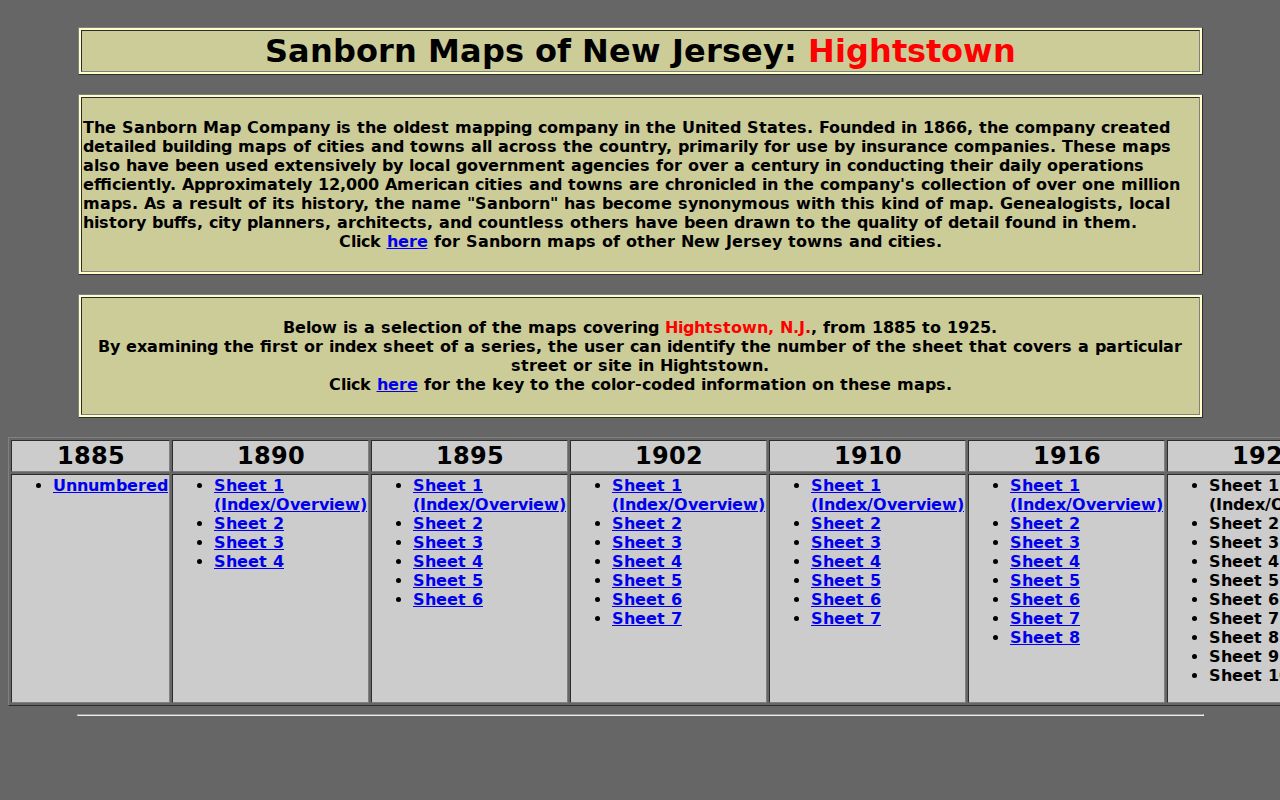
Its dated sheet inventory can confirm whether the historical map contains the place under study, then the directory and newspaper evidence can be compared without merging their roles.
- 1838: Mercer County’s land-record coverage begins with county incorporation; earlier property research may need predecessor-county material.
- 1846 through 1879: several listed Hightstown newspaper runs begin, creating local dated name and place leads.
- 1885 through 1925: the selected Hightstown Sanborn map years document built-form context.
- 1901 through 1958: HeritageQuest lists selected Polk’s Princeton directory years with gaps.
- 1950: the latest released federal census year under the 72-year rule in 2026, while 1960 is due in 2032.
Note: Record the Sanborn sheet and edition year because a map can confirm a site’s built form without naming the people there.
East Windsor Archive Sources
The Hightstown-East Windsor Historical Society is the local archive bridge between a printed name and a place. The Society was founded in 1971 and is based at the Ely House and Freight Station, 164 North Main Street in Hightstown. Its library holds newspapers, maps, and books dating to the mid-1800s. The Ely House dates to about 1850, and the Freight Station was built in 1869 for the Camden & Amboy railroad. Those dates explain why the collection can be richer for local context than an online surname result.
The Society lists museum hours on the first Sunday of each month except July and August, from 1 to 3 p.m.; confirm before travel. East Windsor researchers can start with the Society’s archive and contact route when looking for a street, family, organization, cemetery, map, or place-name lead. Its materials are a research resource, not a current private-person directory.
Tracing East Windsor City Directories
Trace one household through available years rather than skipping from an early hit to a modern conclusion. Begin with a dated entry, retain the exact title and place label, and check the nearest earlier and later available editions. Mark first and last appearance, address changes, printed telephone information, and gaps. Use the street side of a Criss-Cross volume when the name side produces no result. Then pair a directory year with the census or newspaper record that is closest in time.
- Identify the volume title, publisher, year, page or image, and whether it actually includes East Windsor or Hightstown.
- Copy the name and address exactly, including initials, suffixes, and the printed locality.
- Check the prior and next available editions, noting moves, spelling changes, and the absence of unissued years.
- Use the relevant Mercer or New Jersey census microfilm year as a separate point-in-time household record.
- Search the digital newspapers for the surname, street, organizations, and place names around the directory year, then verify the issue and page.
A household that disappears from a dated directory may have moved, died, changed name form, fallen outside the volume’s coverage, or simply not been listed. Estate notices, obituaries, deeds, and census records are separate checks. For current property records keyed to an address, use the East Windsor street records rather than stretching an old listing into a present-day fact.
East Windsor Directory Limits
Historical directories, newspapers, maps, and census rolls show different roles and dates. A directory supports “listed at address in that edition.” A Sanborn map supports “building or site shown on that sheet.” A census supports “enumerated at that time.” A newspaper supports “mentioned in that issue.” Keep the source date, record type, and relationship visible. This protects a family-history trail from false certainty and helps reconcile an East Windsor or Hightstown label without inventing a continuous roster.
New Jersey’s Open Public Records Act route applies to public government records held by the correct custodian, but it does not create a missing historical directory or override restricted records. When an exact local directory, yearbook, obituary index, or cemetery database was not located in official sources, the documented alternatives are the library desk, the Society, the Hightstown newspaper archive, county genealogy links, and the State Archives.